The challenge: economic data in incompatible formats
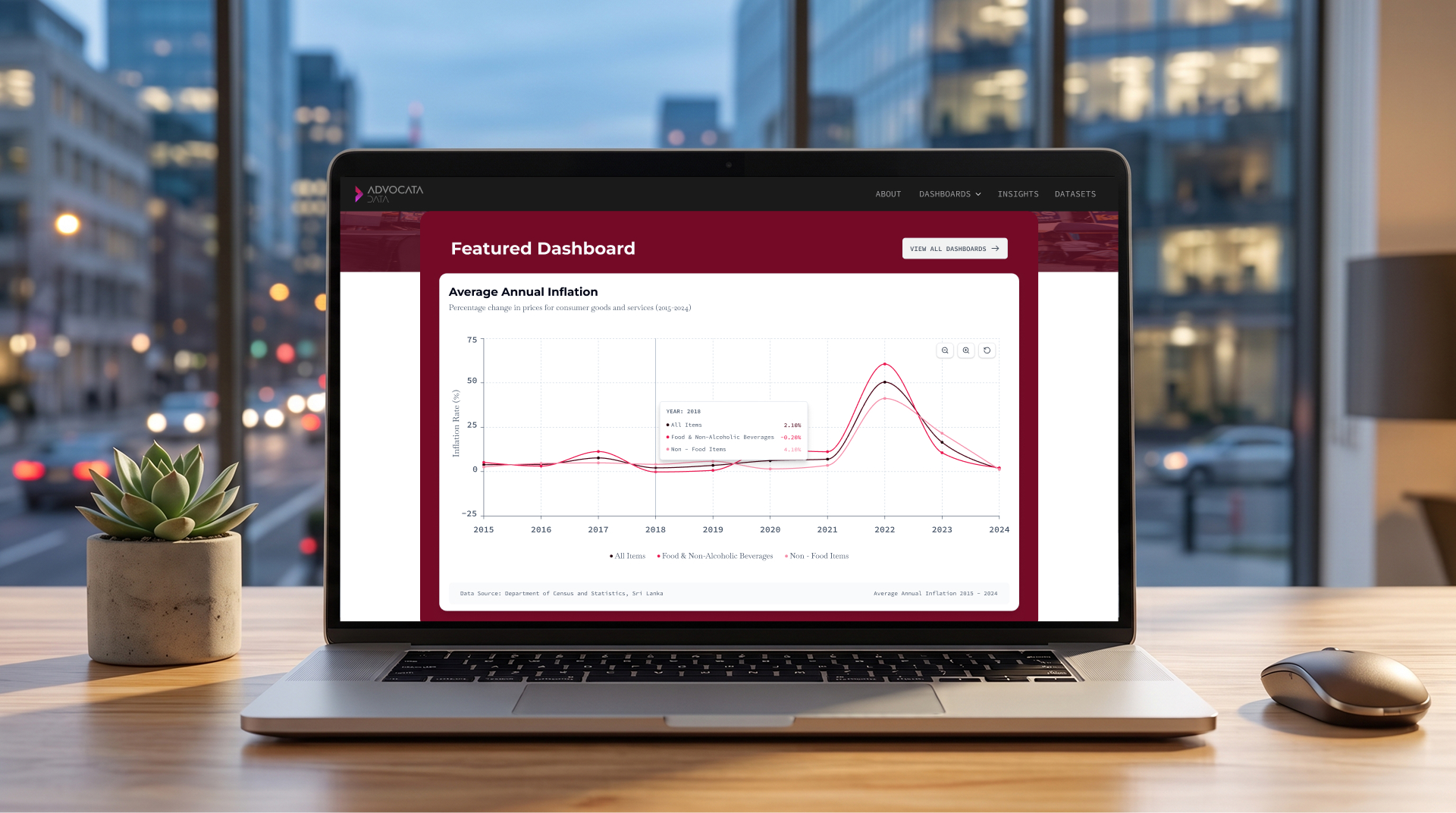
Advocata Institute had accumulated substantial economic and governance data across spreadsheets, reports and other source formats. The information was valuable, but it was difficult to read consistently, reuse across products or keep connected to a reliable public interface.
Creating reusable data infrastructure
ODDLY worked with Advocata to normalise the source material into structured datasets with clear attribution. The same underlying data can then be maintained over time and used to produce public dashboards rather than being locked inside static files.
Adding discovery and AI-assisted questions
The platform combines two forms of intelligent access. Algolia supports AI-assisted search across the repository, while a question-answering layer lets users ask questions from Advocata’s economic data. Both are designed around the data and sources held by the platform, rather than acting as a generic chatbot.
A public repository designed to keep growing
The result is a maintainable foundation for a public repository of economic data. Advocata can continue adding and updating datasets, publish dashboards from the structured information and make evidence easier for researchers, journalists, policymakers and the public to explore.
Research translated into clinical decision support
ODDLY worked with two La Trobe University research teams to turn specialist health research into practical digital products. The Palliative Care Assessment Toolkit (PCAT) supports aged-care nurses through a structured patient questionnaire and AI-assisted signals. Communication Connect turns co-designed research into accessible resources and self-management support for people with communication disability, carers and healthcare professionals.
From questionnaire responses to useful signals
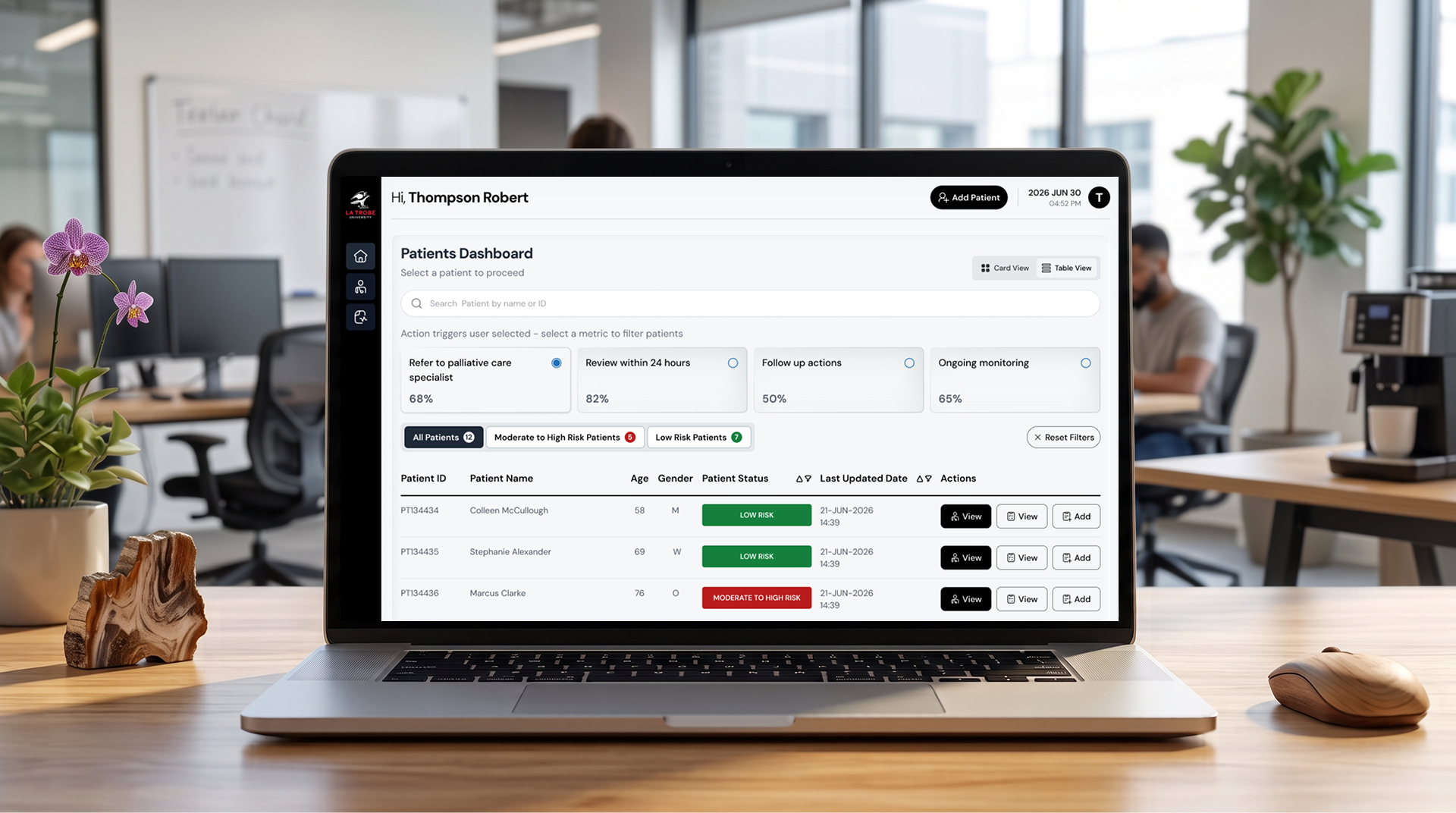
PCAT operationalises La Trobe’s palliative-care research in a digital workflow. Nurses record structured information from the patient assessment; the product applies the project’s AI-enabled logic and surfaces signals that can help healthcare professionals identify areas requiring attention and consider the next action.
The product is designed as decision support. It makes research-based patterns easier to see, but it does not replace professional judgement, diagnosis or clinical responsibility.
Designing for research and real healthcare settings
ODDLY worked across discovery, UX/UI design, low- and high-fidelity prototyping, user testing and digital product development. Researchers, clinicians and healthcare stakeholders helped refine the questionnaire flow, terminology, signals, reporting and how possible actions are presented.
For Communication Connect, accessibility and co-design shaped the product from the start. The platform brings together communication, mood, treatment, technology-support and self-management resources in an environment designed for people with communication disability and the people who support them.
A foundation for evaluating better outcomes
Both products give La Trobe’s research teams usable systems they can test and refine in real healthcare environments. PCAT is designed to support earlier and more consistent responses from nurses, with the expectation that this can contribute to better patient outcomes. Establishing and measuring those outcomes remains part of the university’s research programme.
Have a website, platform or product in mind?
We collaborate internationally with foundations, research networks, and non-profits.