AI-Enabled Digital Products for Health Research

Client: La Trobe University AI-enabled digital health products · 03 June 2026
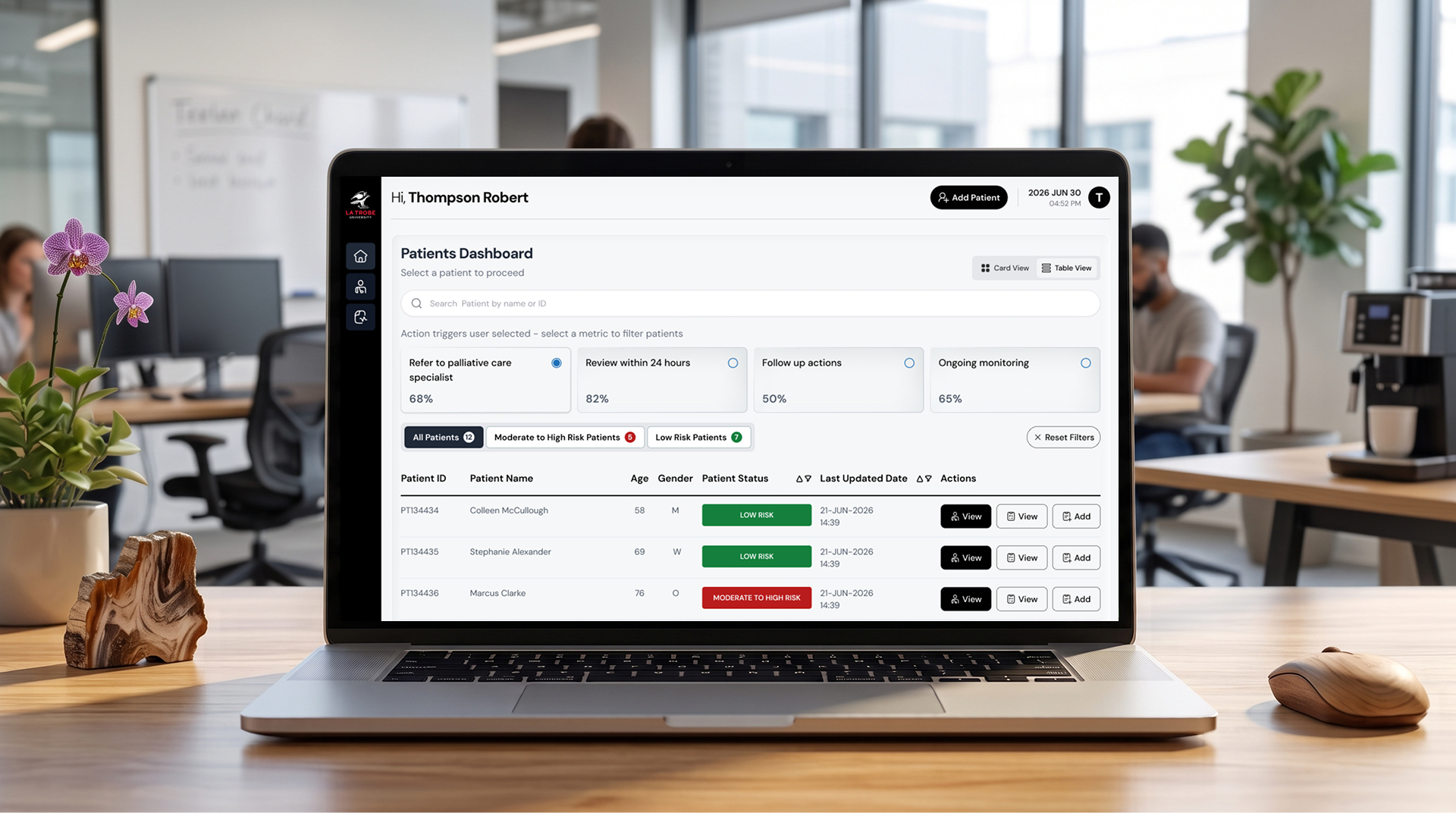
Patients Dashboard table view displayed on a laptop screen on an office desk.
Project at a glance

Organisation

La Trobe University

Sector

University Research · Digital Health

Project Type

AI-enabled digital health products

Services

Product discovery · UX/UI design · Prototyping · User testing · AI product enablement · Digital product development · Accessibility · Data and analytics integration

Platform

React / Next.js · Headless WordPress · API integrations · AI-assisted clinical decision support

Launch Date

03 June 2026
The organisational problem

Turning university research into AI-enabled tools for healthcare professionals

ODDLY worked with two La Trobe University research teams to translate specialist health research into practical digital products. The Palliative Care Assessment Toolkit (PCAT) gives aged-care nurses a structured way to assess patients and receive AI-assisted signals from questionnaire responses. Communication Connect turns co-designed research into accessible resources and self-management support for people with communication disability, carers and healthcare professionals.
Why this was more than a standard website

Research translated into guided workflows

PCAT operationalises La Trobe’s palliative-care research in a digital workflow. Nurses capture structured information through a patient questionnaire; the product analyses the responses and surfaces signals that can support timely, consistent attention and action. It is designed to support professional judgement, not replace it. Communication Connect applies the same product discipline to co-designed research on communication, mental health and long-term self-management.

The process & delivery

What we designed and built

Turning specialist health research into usable digital products

For PCAT, ODDLY translated La Trobe’s palliative-care research and assessment methodology into a structured application for nurses and administrators. The workflow captures questionnaire responses, applies the project’s AI-enabled logic and presents signals, risk information and possible next actions in a form healthcare professionals can use. We moved from discovery through low- and high-fidelity prototypes, refining the experience with researchers, clinicians and healthcare stakeholders. For Communication Connect, we translated research and co-design outcomes into an accessible platform for people with communication disability, carers and healthcare professionals.

Technologies deployed
React / Next.js Headless WordPress API integrations Role-based user access Data and analytics integration Responsive web application WCAG 2.1 AA accessibility requirements Australian-hosted infrastructure requirements
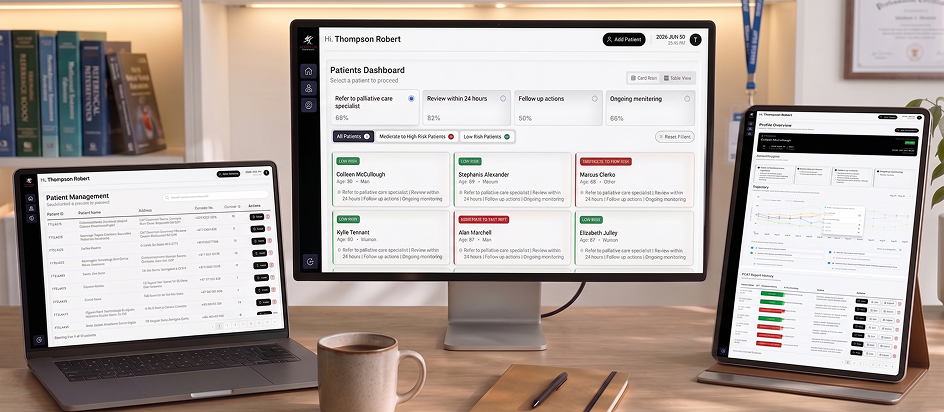
Patients Dashboard and Patient Management interface displayed across laptop, desktop monitor, and tablet screens.
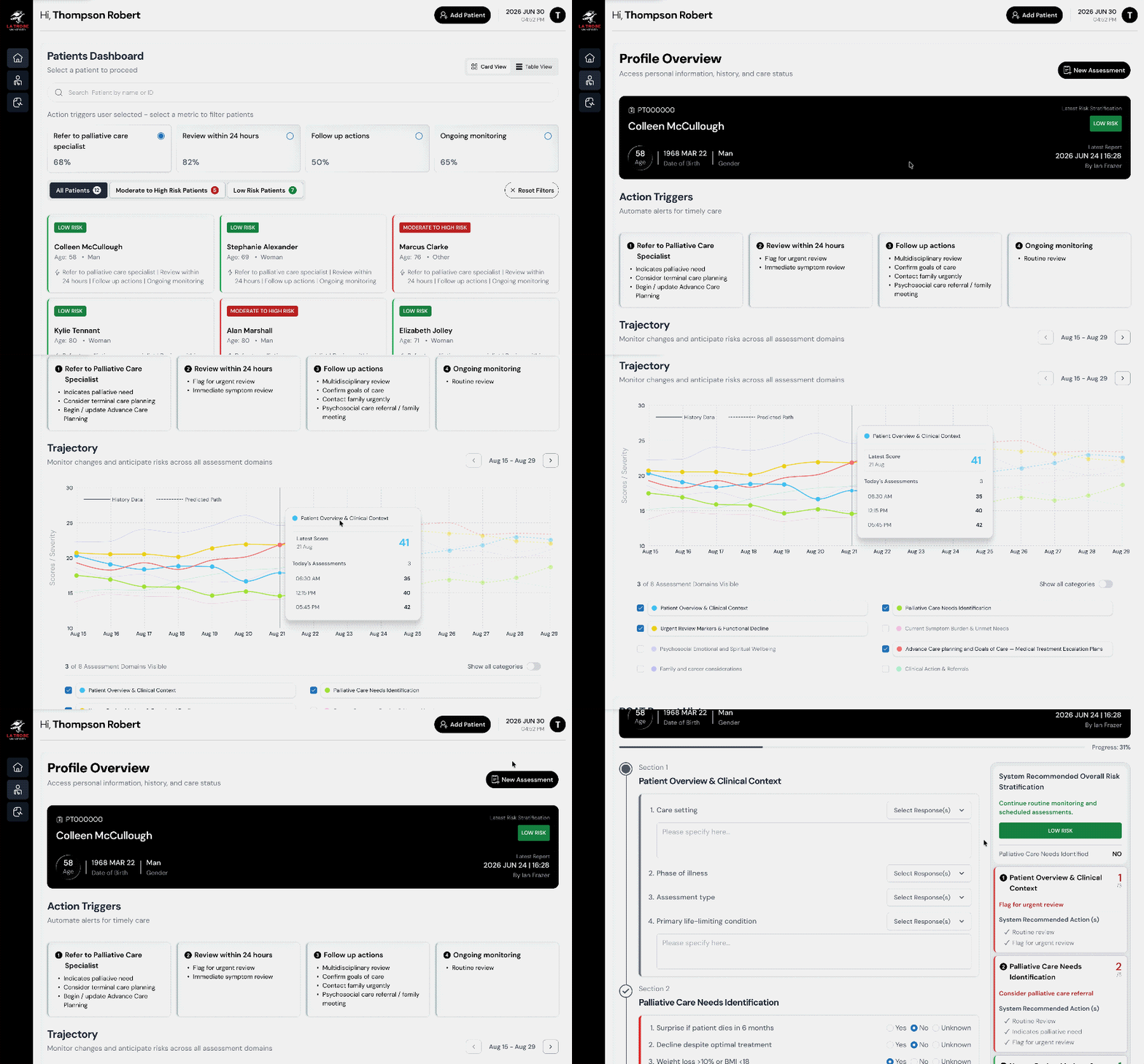
Patients Dashboard showing patient cards, risk levels, search bar, and action trigger filters.

What changed

By placing research logic inside usable digital products, La Trobe’s teams can evaluate how AI-assisted signals and accessible resources work in real healthcare settings. PCAT is designed to help nurses identify needs earlier and respond more consistently, with the expectation that this can contribute to better patient outcomes; the research programme is responsible for testing and validating those outcomes.

Qualitative outcomes

A manual process became a digital clinical workflow

PCAT brought patient management, assessment, reporting, action triggers and longitudinal information into one structured experience.

Clinical information became easier to understand and act on

Patient dashboards and assessment history help clinicians review current needs and understand change over time.

User feedback directly shaped the product

Multiple prototype and testing rounds influenced navigation, terminology, assessment layouts, reporting and how risk and recommended actions are communicated.

Accessibility became part of the product experience

Communication Connect translates co-designed research into an accessible platform for people with communication disability, carers and healthcare professionals.
Research moved closer to real-world use

Rather than stopping at research frameworks or prototypes, both projects created digital foundations that can be tested, refined and used within real healthcare environments.

Have a website, platform or product in mind?

We collaborate internationally with foundations, research networks, and non-profits.